Grade 8 History · 68-post course reader

HISTORY’S GROUP CHAT

Chapter 1: How Historians Think

live chapter8 charactersno login
01

Lesson 1

The Past and History

Posts 117
#01History has entered the chat
John A. Macdonald created HISTORY'S GROUP CHAT and made himself admin.

Welcome. I have taken the liberty of placing myself in charge.

HOW are you already admin

George Brown joined the chat.

You appointed yourself.

Experience.

That is not experience.

A technicality.

#02The basic distinction
John A. Macdonald renamed the chat MY ACHIEVEMENTS.

Change it back.

Wait. Is the past different from history?

The past happened. History is what we build from the evidence that survived.

Some versions are better than others.

You mean the ones where you look good.

I mean the accurate ones.

He means the ones where he looks good.

#03The past does not leave a complete file
started the thread

So most of the past is just… gone?

I published a newspaper. I left plenty.

Because you owned the newspaper.

That helped.

Governments also produce magnificent amounts of paper.

I got one clay tablet through five thousand years.

Show-off.

#04Human time is enormous
started the thread

Humans: about 300,000 years. Writing: about 5,000?

Written names showed up SO late.

And yet everyone after me keeps calling themselves ancient.

I suddenly feel youthful.

You are.

That felt disrespectful.

#05Meet Kushim. Maybe.
Historian uploaded an Uruk-period clay tablet.
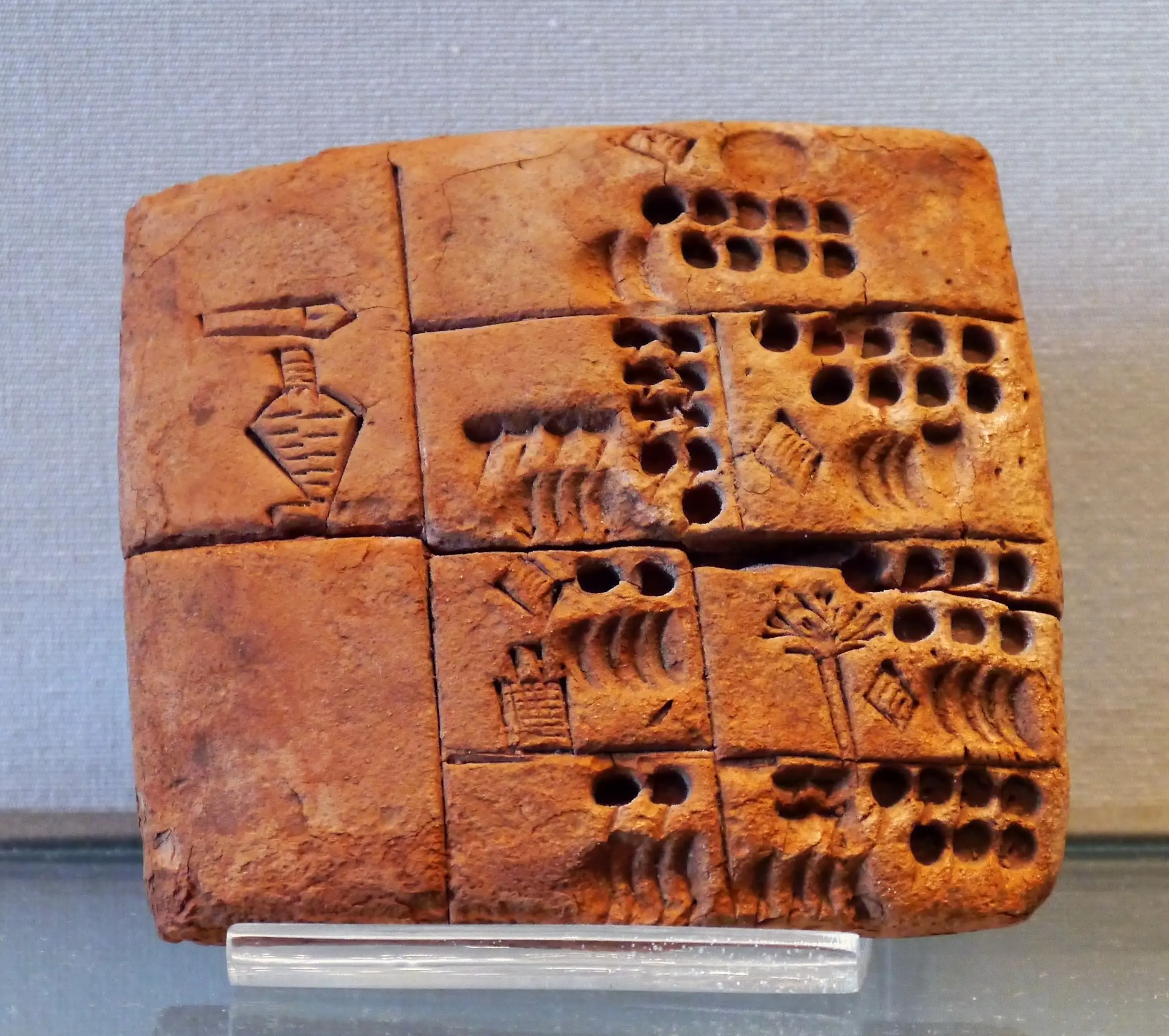
Ancient clay administrative tablet impressed with early writing and number signs
This Late Uruk clay tablet records administrative information in proto-cuneiform, c. 3500–3100 BCE.Musée du Louvre, AO 29562; photograph by Poulpy, CC BY-SA 3.0

Barley accounted for. Record complete.

Is Kushim actually your name?

Ask the tablet.

I can't read it.

It may be a name. It may be a title or office. We cannot prove which.

Excellent. I have survived for five thousand years as a maybe.

#06Uncertainty is not failure
started the thread

I prefer certainty. It projects confidence.

It also projects things the evidence did not say.

So 'we don't know' can be the right answer?

Often.

My entire profile is one carefully researched shrug.

Could we verify him anyway?

No.

#07A source is not automatically evidence
Historian uploaded an old letter.

Okay. What does it prove?

What is your question?

You need the question first?

My speeches answer every possible question.

They certainly take long enough.

#08One object, several questions
started the thread

This tool can show what it was made of and how somebody used it.

And what they believed.

George-Étienne Cartier joined the chat.

No.

Right. The object doesn't read minds.

Could my hat reveal my nation-building genius?

It reveals that you owned a dramatic hat.

You were supposed to support me.

#09A pyramid is an investigation
started the thread

How do you even investigate a pyramid?

That's not one source. That's a whole folder.

Finally. A building older than Macdonald's opinions.

I have been in this chat for nine posts.

An exhausting era.

#10Power leaves designed messages
started the thread

Roman arches. Coins. Statues. At last, people who understood public image.

The ruler paid for the public image.

So it shows how rulers wanted people to see them.

And how people saw them.

First part, yes. Second part, you just added.

John A. Macdonald tried to pin his portrait.
Pin rejected.
#11Oral history carries knowledge
started the thread

What if people shared history by speaking instead of writing?

Then oral history can carry knowledge the written record does not.

Writing did not invent memory.

Nor did government paperwork invent experience.

So you compare oral histories with other sources too.

#12Who had the power to leave words behind?
started the thread

My newspaper printed thousands of pages.

Because you had money, equipment and readers.

And opinions. Endless opinions.

You read them.

People without that power left fewer records.

Absence from an archive is not absence from history.

#13A painting is not a photograph of history
Robert Harris's The Fathers of Confederation was shared to the chat.

Finally. A balanced source.

You're in the middle.

It was painted about twenty years after the conference.

And where are the women? Indigenous nations? Most regular people?

Outside the composition.

So: painting, not time machine.

#14Official records preserve the system's voicequiet thread
started the thread

An official file records what the government decided.

Does it record what happened to the people affected?

Not necessarily.

Then you need their testimony too.

Macdonald is typing…
Macdonald stopped typing.
#15More evidence is not automatically better history
started the thread

Future historians will have our photos, texts, searches, locations—everything.

But they'd know what we did.

They may find six hundred lunch photos and no explanation for the argument afterward.

Oil portraits required more discipline.

You tried to pin yours three times.

Discipline.

#16Corroboration builds stronger history
started the thread

One strong source should be plenty.

The source being you?

Precisely.

What if another source disagrees?

Compare them.

And if they agree?

The claim gets stronger. Not invincible.

He hates this method.

#17Lesson 1: the surviving record
started the thread

Okay. The past isn't a complete folder waiting for us.

Sometimes it is one tablet that refuses to explain your name.

Then publish the flattering version.

That was not one of the steps.

Lesson 1 complete. John A. Macdonald started a new argument.
02

Lesson 2

Historical Significance

Posts 1834
#18Old is not the same as important
started the thread

I am famous. Therefore, significant.

I am ancient. Therefore, more significant.

Is that how this works?

Neither proves it.

Wonderful lesson.

I object to its conclusion.

#19The old-letter campaign begins
Historian uploaded: household note, 1880.

Old. Handwritten. Mysterious stain. Clearly important.

IT SAYS MILK.

The nation survives another crisis.

You do not know how urgent the milk was.

Bro. It's a grocery list.

#20Valuable evidence, limited significance
started the thread

The note can still show handwriting. Food. Who did errands.

Did it change the country?

No.

Did it change one trip to the shop?

Probably.

Useful is not the same as significant.

#21A law enters the comparisonquiet thread
Historian uploaded: Indian Act, 1876. Decorative reactions are off.
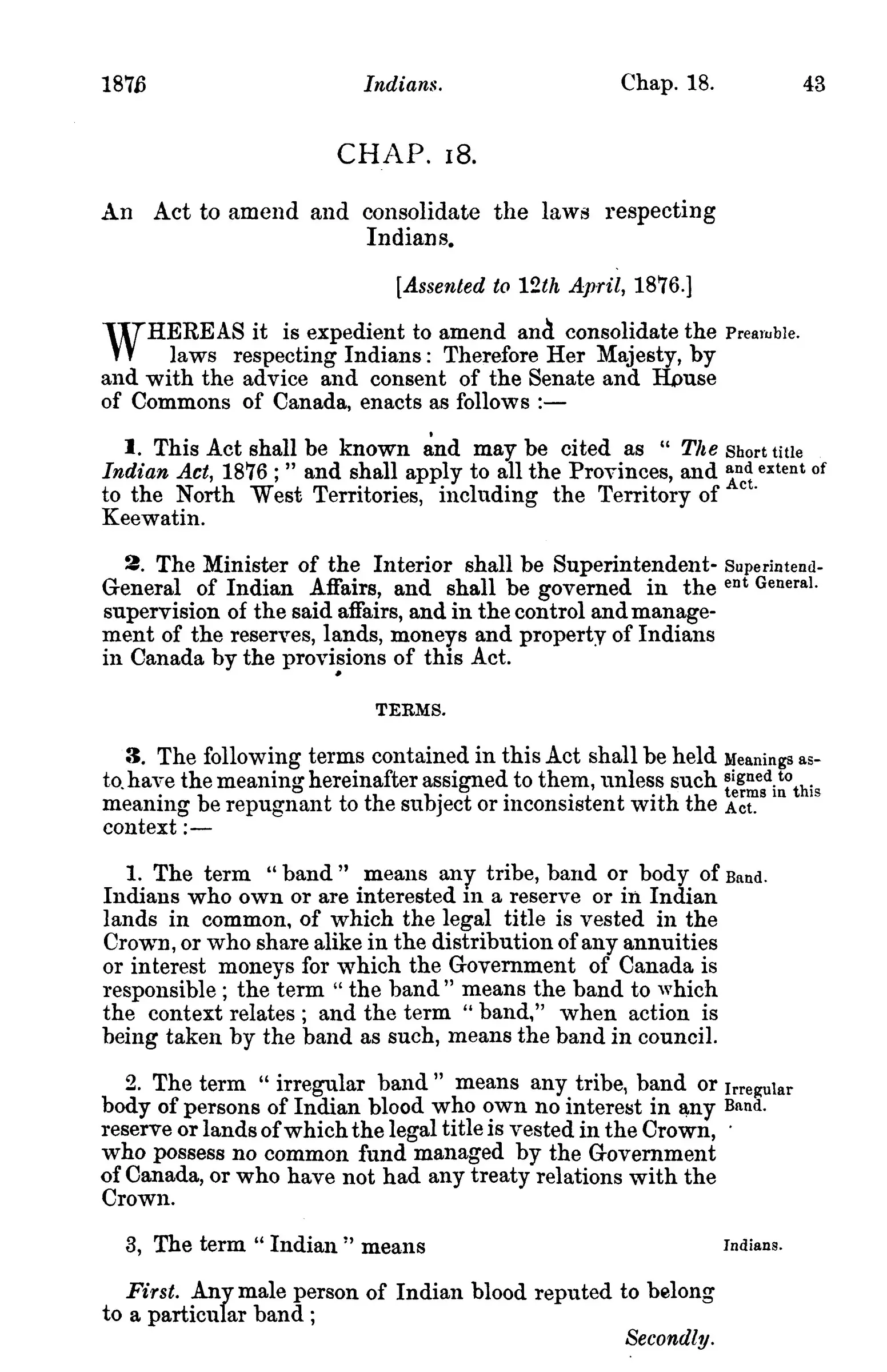
Digitized page from the Indian Act of 1876
Opening page of the 1876 federal statute titled ‘An Act to amend and consolidate the laws respecting Indians.’Parliament of Canada; reproduction from Canadiana / Library and Archives Canada

This is still Canadian law?

Amended many times. Still law.

It belonged to the colonial policy of my governments.

Then the effects don't stop in 1876.

#22The law did not merely describe peoplequiet thread
started the thread

The law let the federal government control identity, leadership, land and cultural practices?

The state claimed that authority.

Claimed it and used it.

Macdonald is typing…
Macdonald stopped typing.
#23Lens one: how deep?quiet thread
started the thread

How do you measure how deep a law goes?

Identity. Family. Leadership. Land. Ceremony. School.

That's people's whole lives.

That is depth.

#24Lens two: how wide?quiet thread
started the thread

Did the Act affect First Nations across the country the same way?

Wide federal reach. Different nations, territories, laws and experiences.

So wide doesn't mean identical.

Reach counts people and territory without flattening difference.
#25Lens three: how long?quiet thread
started the thread

1876 to now?

The law changed repeatedly. It did not disappear.

That's a long consequence.

Long consequences can change shape without ending.
#26The host becomes evidencequiet thread
started the thread

Context matters.

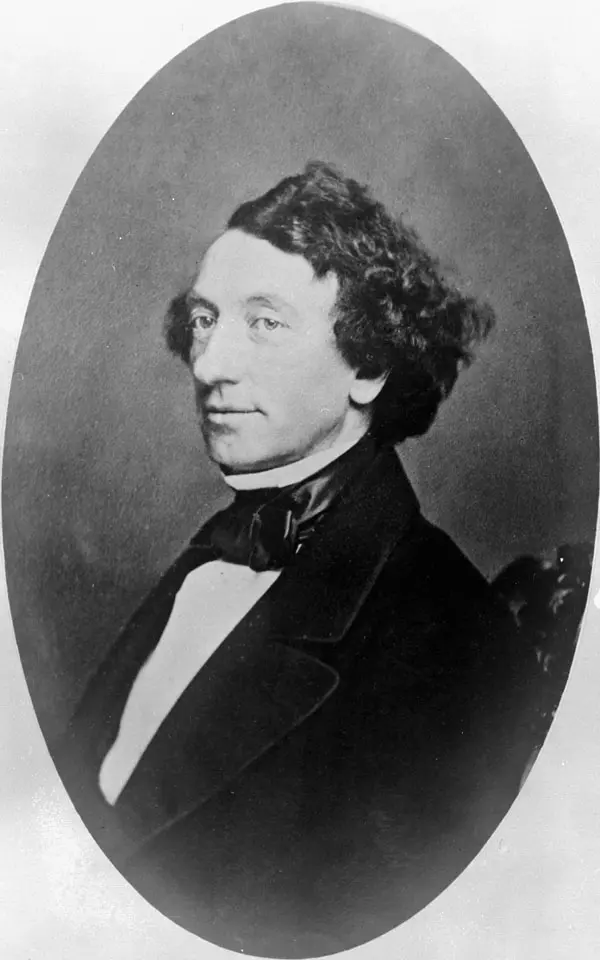
Historical portrait of Sir John A. Macdonald
Sir John A. Macdonald, Canada's first prime minister.Library and Archives Canada, MIKAN 3218729, public domain

You don't get to use context like an exit button.

I said it matters.

It does.

And so does the harm.

#27Residential schools were part of the policyquiet thread
Residential schools separated Indigenous children from families, languages and cultures. Many experienced neglect, abuse, illness and death.

The institutions wrote records about themselves.

Survivor and family testimony is essential.

Otherwise the people who ran the system get to tell the whole story.

The National Centre for Truth and Reconciliation preserves records, testimony and the names of children who never returned home.
#28Purpose stated in Parliamentquiet thread
Historian shared a House of Commons quotation from 9 May 1883.

Macdonald argued that Indigenous children should be “withdrawn as much as possible from the parental influence.”

You said that in Parliament?

The words are mine.

It proves stated purpose. It does not contain every child's experience.

#29Impact is measured in livesquiet thread
started the thread

A number can't show what happened to one child.

Or one family.

Policy records must be read with lived experience, family testimony and community knowledge.
Harm continued across generations. Survivors and communities also carried knowledge, resisted and rebuilt.
#30People resistedquiet thread
started the thread

People didn't just accept every policy.

They resisted, adapted, protected knowledge, organized, went to court and demanded change.

Then resistance is part of the history too.

Agency does not erase harm. Harm does not erase agency.
#31The comparisonquiet thread
started the thread

The milk note and the Indian Act are both primary sources.

But one recorded an errand. The other changed people's lives for generations.

Depth. Reach. Duration.

Both primary sources. Not even close to the same impact.

#32Significance is a judgment
started the thread

I rank myself first.

By what criteria?

First prime minister. Confederation. Railway. Excellent portrait.

Portrait is not a criterion.

It should be.

Different rankings can work. Show the evidence.

He was hoping volume would count.

#33A legacy is still moving
started the thread

People are still arguing about my name on schools and streets.

That would be your legacy refusing to sit still.

So a legacy lasts, but people can challenge it and change it.

I have noticed.

#34Lesson 2: make the case
started the thread

Deep. Wide. Long. Then bring evidence.

Excellent. I remain first.

He learned the words. Nothing else.

He is also not old.

Why are you still here?

Records last.

Lesson 2 complete. Macdonald tried to close the comments.
03

Lesson 3

Cause, Consequence and Perspective

Posts 3551
#35One cause would be convenient
started the thread

Can a huge event have one cause?

One cause is tidy. Excellent for speeches.

Also usually wrong.

So… a chain?

Long conditions. Short causes. Trigger. Decisions.

Already less tidy.

#36Europe before 1914
Before 1914: militarism, imperial competition, nationalism and alliance systems increased tension across Europe.

Europe had been stacking problems for years.

An arms race, rival empires and alliances. That is a crowded cabinet.

Dangerous does not mean inevitable.

But it means one crisis could get huge fast.

#37The trigger
28 June 1914: Archduke Franz Ferdinand was assassinated in Sarajevo.

And that caused the whole war?

Triggered the crisis. Did not build the alliance system.

A crisis found a system ready for it.

You can stay.

I founded the chat.

#38A trigger is part of the chain
started the thread

Wait. Leaders still chose ultimatums, mobilization and war.

Leaders make choices. Even inside bad conditions.

Interesting how clearly he sees responsibility when it belongs to someone else.

We are discussing Europe.

That's the chain.

#39Consequences create new causes
started the thread

The war ended in 1918. End of event.

Not end of the effects.

Political. Economic. Human.

Consequences can become causes.

Governments strongly prefer an end point.

History declined your request.

#40The same event does not produce the same experience
started the thread

Could we publish one official total for what happened next?

To who? Where? For how long?

That is several totals.

Ask who got the benefit. Then ask who paid for it.

So there isn't one consequence column.

#41The railway joins the group
John A. Macdonald uploaded a Canadian Pacific Railway map.
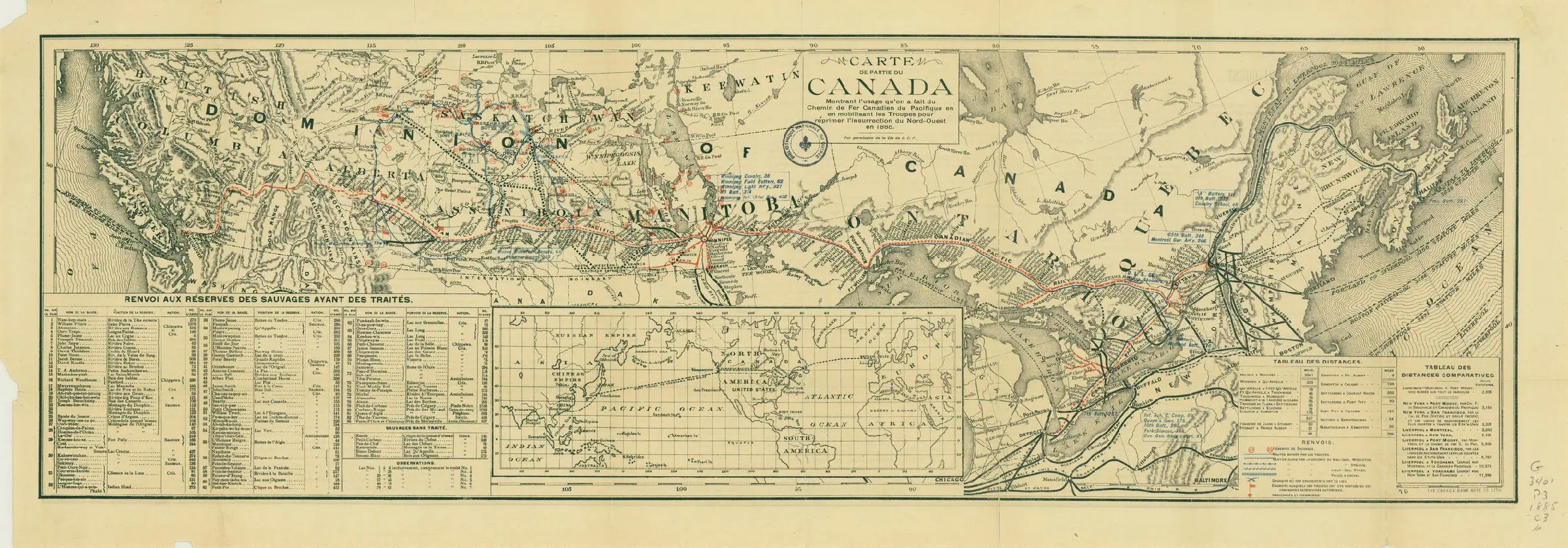
Historical map of the Canadian Pacific Railway route across Canada
This 1885–86 map shows the Canadian Pacific Railway route and its use moving troops during the North-West Resistance—evidence that the line carried state power as well as passengers and goods.Canada Bank Note Company; digitized by Bibliothèque et Archives nationales du Québec, public domain

My National Dream. Steel from east to west. Please pin this.

A transcontinental connection mattered to the political project.

Didn't you promise British Columbia a railway before it existed?

That is the next post.

Keep scrolling.

#42A promise to British Columbia
started the thread

British Columbia joined Canada in 1871. The railway connection was a central term.

BC was THAT far away and you promised a railway?

Precisely.

Did you HAVE a railway?

Not at that exact moment.

omg

A bold promise becomes less bold when someone else has to build it.

#43Nation-building consequences
started the thread

The railway moved people, goods, mail and officials. Connected the country.

Also soldiers.

And federal power.

Connected. The. Country.

He is trying to pin the short version.

#44Geography shaped the building
Student shared a route map.

Prairie. Rock. Lakes. Muskeg. Mountains.

The map looked manageable.

Maps do not blast rock.

Or stop mountains being mountains.

The mountains were not team players.

They were there first.

#45The railway crossed existing homelandsquiet thread
Historian uploaded an 1875 government treaty map.
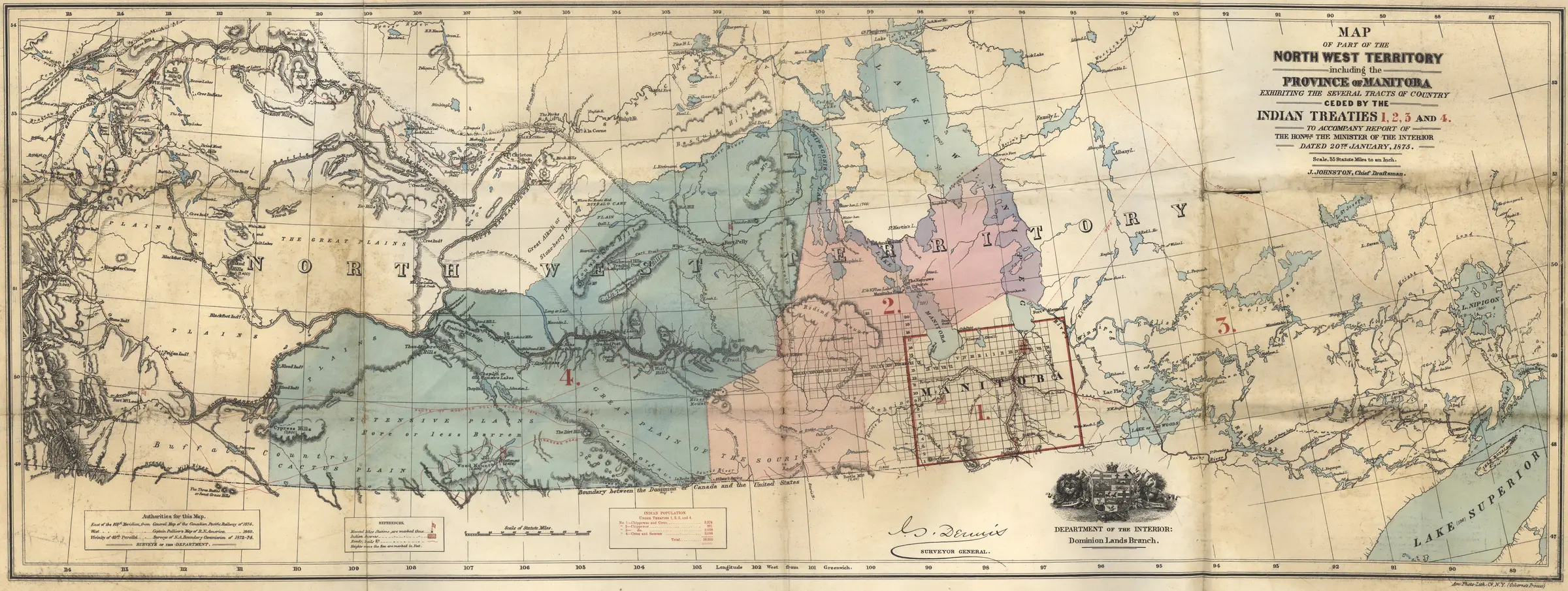
Map showing Indigenous territories or treaty geography in Canada
This 1875 government map shows its representation of lands associated with Treaties 1–4. It is a colonial record, not a complete or neutral map of First Nations territories.Canada Department of the Interior; University of Manitoba Archives, CC BY 2.0

A railway map can make the land look empty.

It was not empty.

The tracks and settlement crossed living Indigenous homelands.

The line gave Canada more control in the West.

And intensified dispossession.

#46Chinese workers carried unequal riskquiet thread
Historian uploaded an archival photograph of Chinese railway workers in British Columbia.
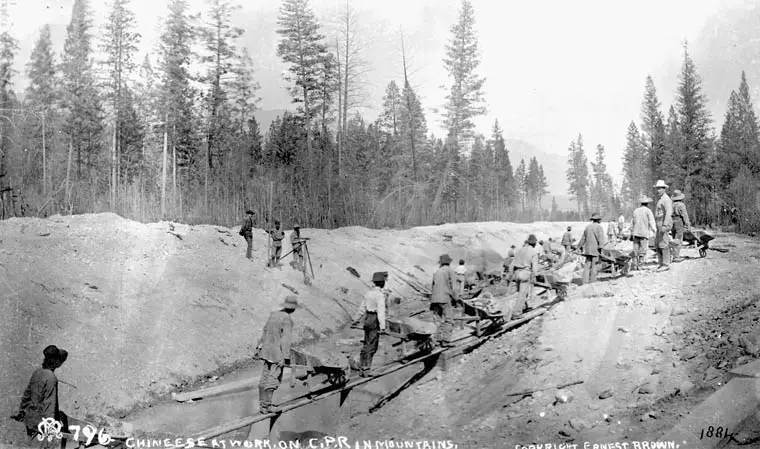
Archival photograph of Chinese railway workers in British Columbia
Chinese labourers were essential to construction of the railway through British Columbia and faced dangerous, discriminatory conditions.Ernest Brown / Boorne & May; Library and Archives Canada, C-006686B, CC BY 2.0

They got paid less and were sent into dangerous work?

And often paid for their own food, equipment and shelter.

The railway needed their labour. But they got more danger and less money.

The exact death toll is uncertain. Unsupported slogans should not be repeated as precise statistics.

We don't know the exact number. We do know it was unequal.

#47Work was followed by exclusionquiet thread
started the thread

The government relied on Chinese workers, then started a head tax in 1885?

Yes. It was meant to restrict Chinese immigration.

They wanted the work. Then targeted the community.

The last spike did not end the consequences.
#48Perspective enters the chat
started the thread

From my position, the railway was national survival.

It was also a political promise holding distant regions together.

Workers had to build it. First Nations saw settlement and government power move across their homelands.

Those accounts do not sound alike.

Same railway. Completely different stakes.

#49Different accounts do not automatically mean lying
started the thread

I brought the coalition together for Confederation.

You joined after I pushed constitutional reform.

We entered the coalition for different reasons.

Same deal. Everyone is starring themselves.

Leadership can look like that.

So can vanity.

#50Context is not an excusequiet thread
started the thread

You must understand the standards of the time.

Were people at the time disagreeing?

Yes. People objected, resisted and proposed alternatives.

Then 'everyone thought that way' isn't true.

Context still matters.

Context. Not immunity.

#51Lesson 3: build the chain
started the thread

So one spark isn't the whole fire. Problems build up, people make choices, then everybody lives with what comes next.

And nobody watches it from the same place.

Which is why controlling the account is important.

He said the quiet part out loud.

Lesson 3 complete. The Vimy Ridge files are opening…
04

Lesson 4

Using Evidence at Vimy Ridge

Posts 5268
#52The evidence challenge
Investigation opened: Was the Canadian assault at Vimy Ridge carefully prepared?

What would prove that?

A source set. Not one dramatic image.

I was dead by then, which may reduce my contribution.

Macdonald was moved to read-only mode for the Vimy Ridge files.

A severe but defensible moderation decision.

#53Know the battle before judging the evidence
Student shared a map of Vimy Ridge near Arras, France.

Seven kilometres of high ground.

Earlier French and British attacks already failed there?

At enormous cost.

Okay. That changes what the preparation evidence means.

#549 April 1917quiet thread
5:30 a.m., 9 April 1917: all four Canadian Corps divisions attacked together for the first time.

About 15,000 infantry in the first wave?

With thousands more behind them.

The attack began in snow, wind and artillery fire.
Thain MacDowell joined the chat.

Scale did not make the ground less dangerous.

#55Preparation before the attack
Historian shared records of maps, models, rehearsals, tunnels and plans distributed before the assault.

They trained for weeks?

A plan in a general's hands was not enough.

So not just generals looking at one map.

#56The creeping barrage
Historian uploaded an artillery timetable for the creeping barrage.

The shellfire moved forward and soldiers followed behind it?

On a timed schedule.

Too slow and it gets away. Too fast and you reach your own shellfire.

A plan matters. So does what happens under fire.

A plan proves intention and coordination—not a perfect outcome.
#57Victory at terrible costquiet thread
Canadian War Museum record: 3,598 killed and roughly 7,000 wounded at Vimy Ridge.

So prepared doesn't mean safe.

No.

And casualties don't automatically mean there was no plan.

#58The source set arrives
Five files added: trench map, aerial photograph, relief map, field message, letter home.

Who brought five different file types

You asked what would prove preparation.

Right.

Read them together.

#59Source 1: trench map
Historian uploaded a 1917 Vimy Ridge barrage map.
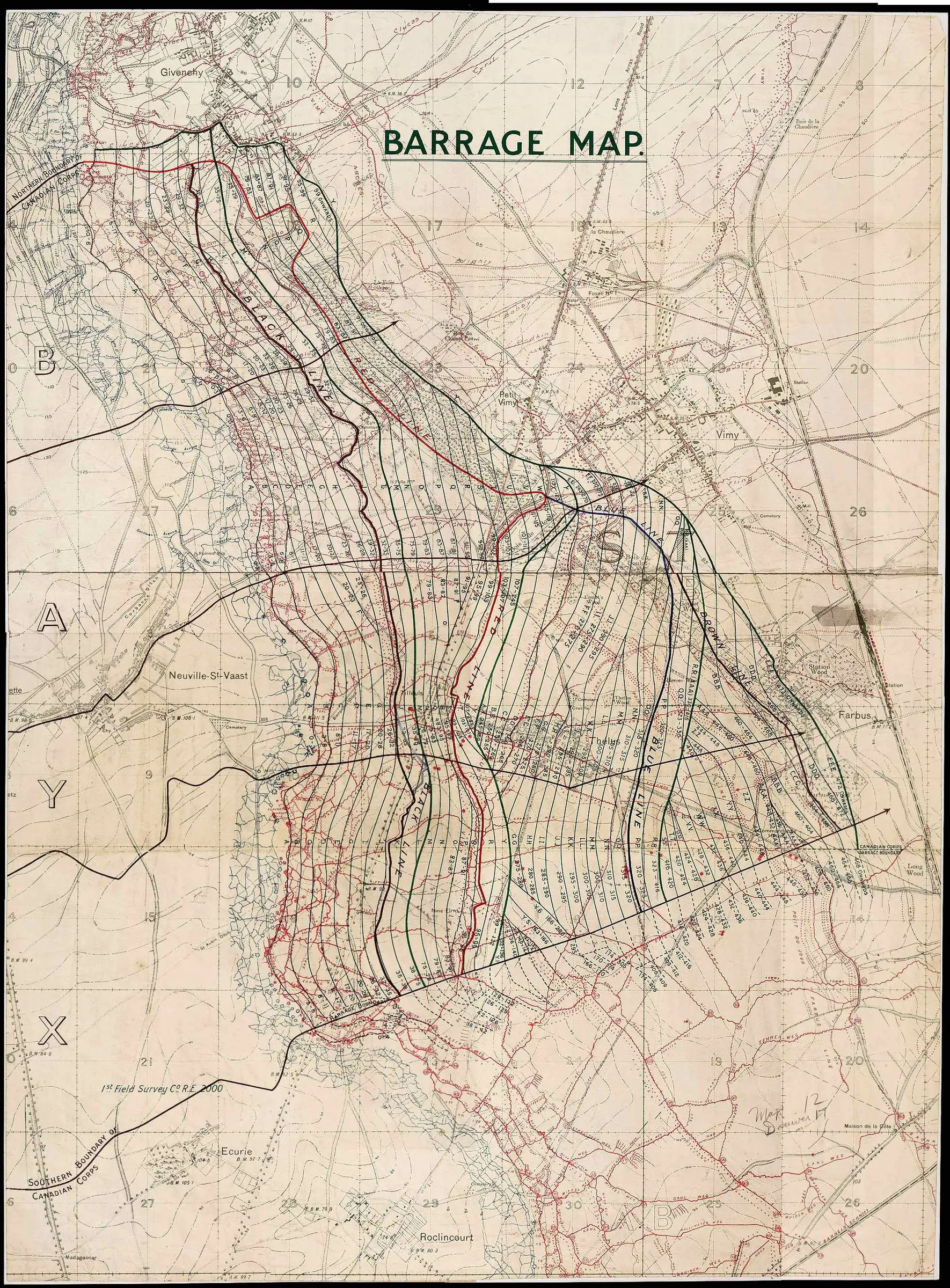
First World War trench map of Vimy Ridge
A 1917 Vimy Ridge barrage map. Coloured lines mark unit boundaries and assault objectives used to coordinate the Canadian Corps attack.Ordnance Survey and 1st Field Survey Company, Royal Engineers; Library and Archives Canada, NMC 111113, public domain

Trenches. Unit boundaries. Assault objectives. This is detailed.

That is what you can see.

So somebody planned this down to the trench and unit.

Yes. Did every soldier see the map?

No.

#60Source 2: Vimy from the air
Historian shared a Canadian War Museum catalogue record for a pre-attack aerial mosaic.
Verified archival sourceOpen the museum record below
The Canadian War Museum catalogues aerial mosaics of the First Canadian Division front dated 5–6 April 1917. The scan is not reproduced here because website permission is required.Canadian War Museum, 19940001-424

The ground is trenches, roads and shell craters.

At one recorded moment, from one angle.

But if the map shows details from the photo, they back each other up.

Corroboration.

Still not the whole plan.

#61Source 3: modelling the battlefield
Historian shared a surviving layered relief map and Frederick George Scott's later testimony about model study.
Verified archival sourceOpen the museum record below
A surviving 1917 relief map supports the preparation claim. Its scan is not reproduced here because website permission is required.Canadian War Museum, 19450039-005

They made the battlefield 3D?

And Scott remembered officers and men visiting a big model.

Object and memory. Two sources.

Both support preparation. Neither proves every unit used this exact model.

#62Three sources, one stronger claim
started the thread

Map shows the plan. Photo shows the ground. Model shows the terrain.

Three sources saying it three different ways.

That slaps harder than one source.

Does it prove every soldier understood the full plan?

Still no.

#63Source 4: an urgent field messagequiet thread
Thain MacDowell uploaded his 8:00 a.m. field message from 9 April 1917.
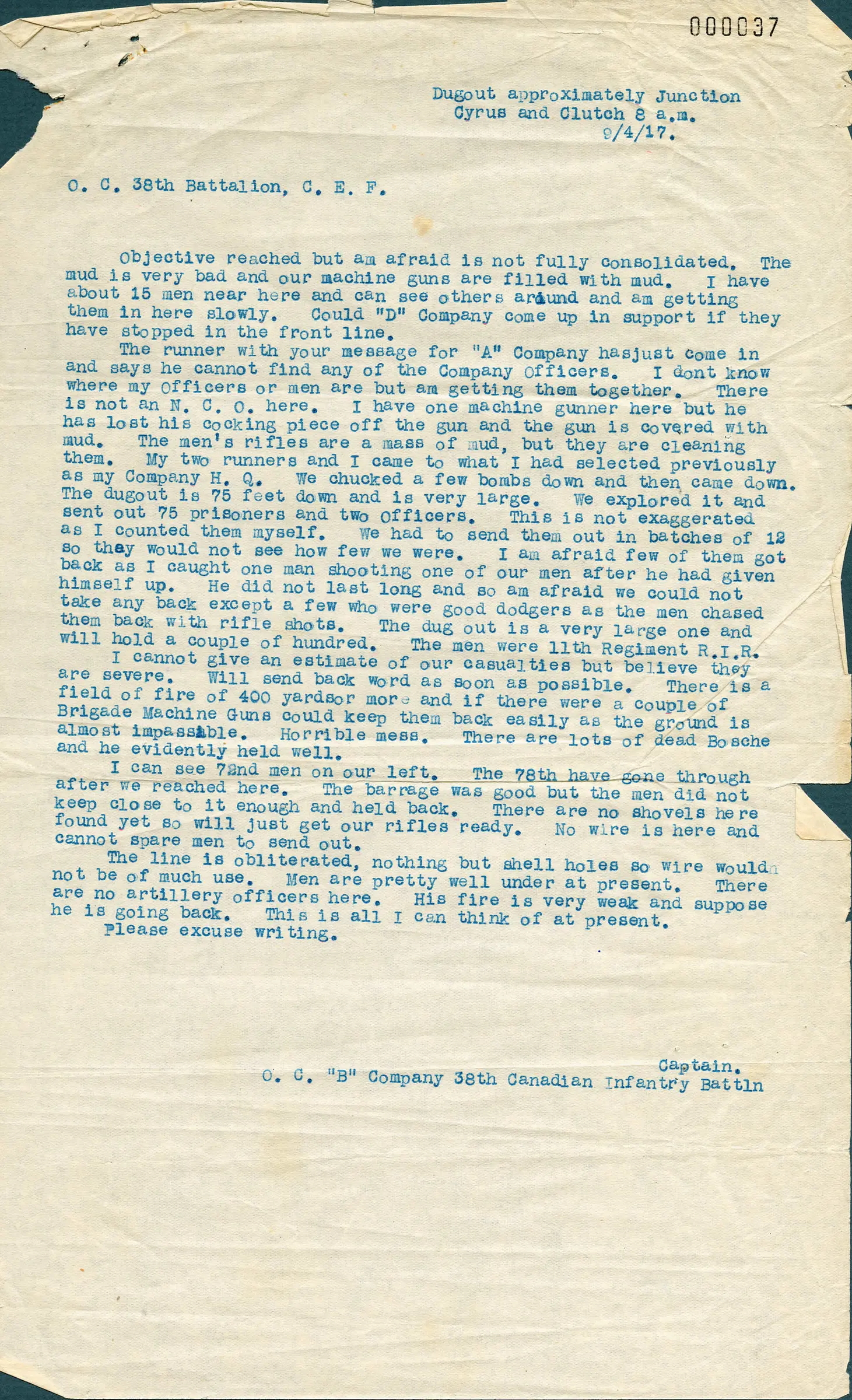
Typed combat message sent by Captain Thain MacDowell at Vimy Ridge
Typed copy of MacDowell's urgent field message from Vimy Ridge, 9 April 1917.Canadian War Museum, CWM 19610015-002; non-commercial educational use

Read what I sent.

“I am afraid we have had rather serious casualties.” Only fifteen men were reported with him at the objective.

Fifteen?

That is what the message says.

One urgent report. Not a complete casualty record.

#64Fact is not inference
started the thread

What I know: MacDowell reported fifteen men with him.

Yes.

What I think: his company took serious losses or got scattered.

Reasonable.

What I can't claim: every company had the exact same experience.

Now you are reading the message.

#65Source 5: a letter homequiet thread
Alvin Kines joined the chat and uploaded his letter home, dated 12 April 1917.
Verified archival sourceOpen the museum record below
Alvin Thomas Kines wrote to his parents on 12 April 1917 to say he had survived the Vimy fighting. The scan is not reproduced here because website permission is required.Canadian War Museum, 19940027-022

It was my birthday. I needed my parents to know I had survived.

Would you tell your parents every detail?

Would you?

No.

Audience matters.

It does not make the letter useless.

#66Bias is not a delete button
started the thread

So if a source has bias, throw it out?

Then you throw out my letter.

And my field message.

Because both have a purpose and an audience.

Position is part of the evidence.

Not a delete button.

#67The defensible conclusionquiet thread
started the thread

Okay. Five sources all point to real planning—maps, models, rehearsals, timing.

But the messages show casualties and confusion. It wasn't clean.

Defensible.

Do not erase the cost.

Or turn every soldier into the same story.

So the answer is yes. Carefully. With limits.

#68Chapter conclusion: think like a historian
Chapter conclusion.

What survived? Who made it? What's missing? What changed?

What led to what? Who saw it differently? How far can the source go?

That will do.

One tablet cannot explain everything.

Macdonald's posting privileges were restored.

Excellent. Pin my opening message.

No.

As the young people say, my narrative slays.

nobody says it like that

Chapter 1 complete

The evidence can carry the claim.

Your reading position is saved in this browser.